Nikon
R10
The Nikon R10 is a semiconductor stepper introduced in 1986. The Nikon R10 processes 150 mm wafers using i-line (365 nm) illumination.[1]

Plate 01The NIKON R10 | A Fantastic SUPER 8 Camera
Analog ResurgenceWatch on YouTubePlate 02The Nikon R10 [Ben's Camera Show S05e04]
Zero Budget Film SchoolWatch on YouTubePlate 03She's the Moon I Nikon R10 Ektachrome 100D
ryan lumleyWatch on YouTubePlate 04nikon R10 super 8 camera Annual Family Bear lake Trip #nikonr10 #kodakfilm
Allen's Photography & VideoWatch on YouTubePlate 05Super 8mm. Shot on Nikon R10 (Kodak 50D & 200T) #super8mm #super8wedding #wedding
Éterna FilmsWatch on YouTubePlate 06Here’s one of my other motion picture cameras. Nikon R10 Super. This one has a GREAT lens on it.
The NegativeWatch on YouTube
What it is
How it works
Where it fits in the process flow
Applications
The Nikon R10 is used for Super 8 motion-picture filming.[4][2]
The Nikon R10 was aimed at high-level amateur movie makers and advanced amateurs.[4][2][3]
- semiconductor lithography
What do the numbers mean?
Wafer handling1
Optics & imaging7
- Viewfinder
- Single-lens reflex with adjustable eyepiece; viewfinder information includes aperture scale[3]
- Exposure control
- Auto and manual; TTL Electric Eye; EE lock yes; exposure compensation +/-2 stops[3]
- Rewinding / reverse filming
- 100 frames approx, double exposure and lap dissolve; reverse filming 100 frames approx[3]
Control & software1
- Connectors
- Remote control socket yes; movie light socket Kodak type with filter control; flash synchronization socket yes[3]
Dimensions & facilities2
Configuration & options14
Vintage & configurations
Documented models & variants
| Designation | Generation | Vintage | Changes | Source |
|---|---|---|---|---|
| Nikon R8 SUPER ZOOM | — | 1973 | Successor to the conventional 8X SUPER ZOOM, with a 7.5~60 mm F1.8 (9-group 13-element) zoom lens; released at the same time as the R10 SUPER ZOOM and less expensive. | imaging.nikon.com[2] |
Where are the manuals?
Generated from public-source data on file. Enter your email to access — nothing is published; details are routed privately.
Not publicly documented
Field notes
No research found yet — worked with this tool? Share what you know.
Frequently asked questions
Not publicly documented
The following facts about the R10 are absent from this record as of this revision. First-hand knowledge or a citation closes a gap; every submission is reviewed before publication.
The control-system platform and OS era of the R10 are not on record.
Answerable by: an engineer who operated it or OEM installation records
No publicly documented failure modes or field errata for the R10 are on record.
Answerable by: a field service engineer, process engineer, or maintenance technician
The process node or technology generation of the R10 is not on record.
Answerable by: an OEM datasheet or a fab qualification report
No publicly documented compatible parts, consumables, or accessories for the R10 are on record.
Answerable by: an OEM parts catalog or a service engineer
No publicly hosted manuals, SOPs, or datasheets for the R10 are on record.
Answerable by: university cleanroom staff or an OEM application specialist
No research found yet — worked with this tool? Share what you know.
Sources & citations
Sources (4)Every fact above is drawn from these public sources
- [1]en.wikipedia.org — en.wikipedia.orgen.wikipedia.org
- [2]imaging.nikon.com — imaging.nikon.comimaging.nikon.com
- [3]filmkorn.org — filmkorn.orgfilmkorn.org
- [4]Nikon Family Cousins, Part 19 : Nikon R10 / R8 SUPER ZOOM | Camera Chronicle | Nikon Consumer — imaging.nikon.comimaging.nikon.com
Last updated Oct 7, 2026.
Compare with similar tools
View all →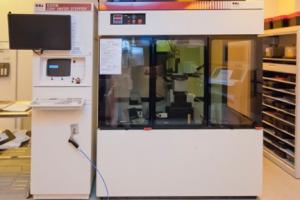
The GCA 6300 DSW is a g-line wafer stepper used for lithography, with source descriptions also identifying related i-line GCA 6300 stepper documentation.
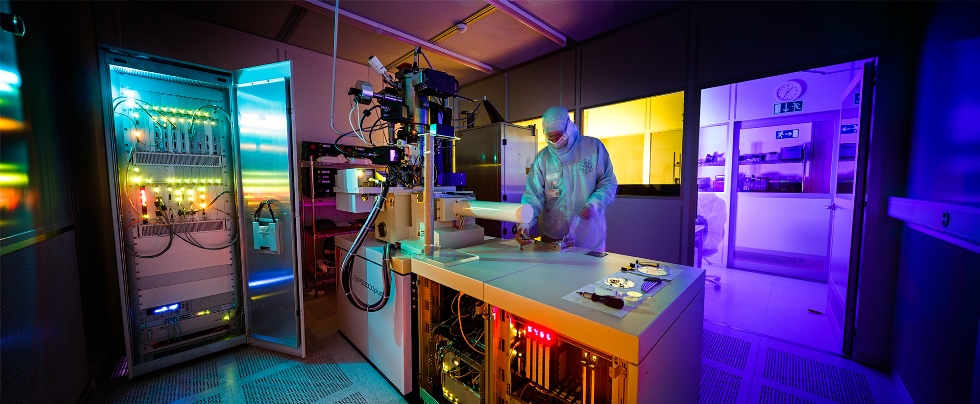
The MA / BA Gen4 Pro Series is a semi-automated mask aligner and bond aligner system supporting wafers up to 150 mm / 200 mm, with capabilities for exposure, UV bonding, fusion bonding, micro- and nanoimprinting, and selective plasma activation.
The MA100 / 150e Gen2 is an automated mask aligner for proximity exposure, supporting wafer sizes up to 150 mm.
